


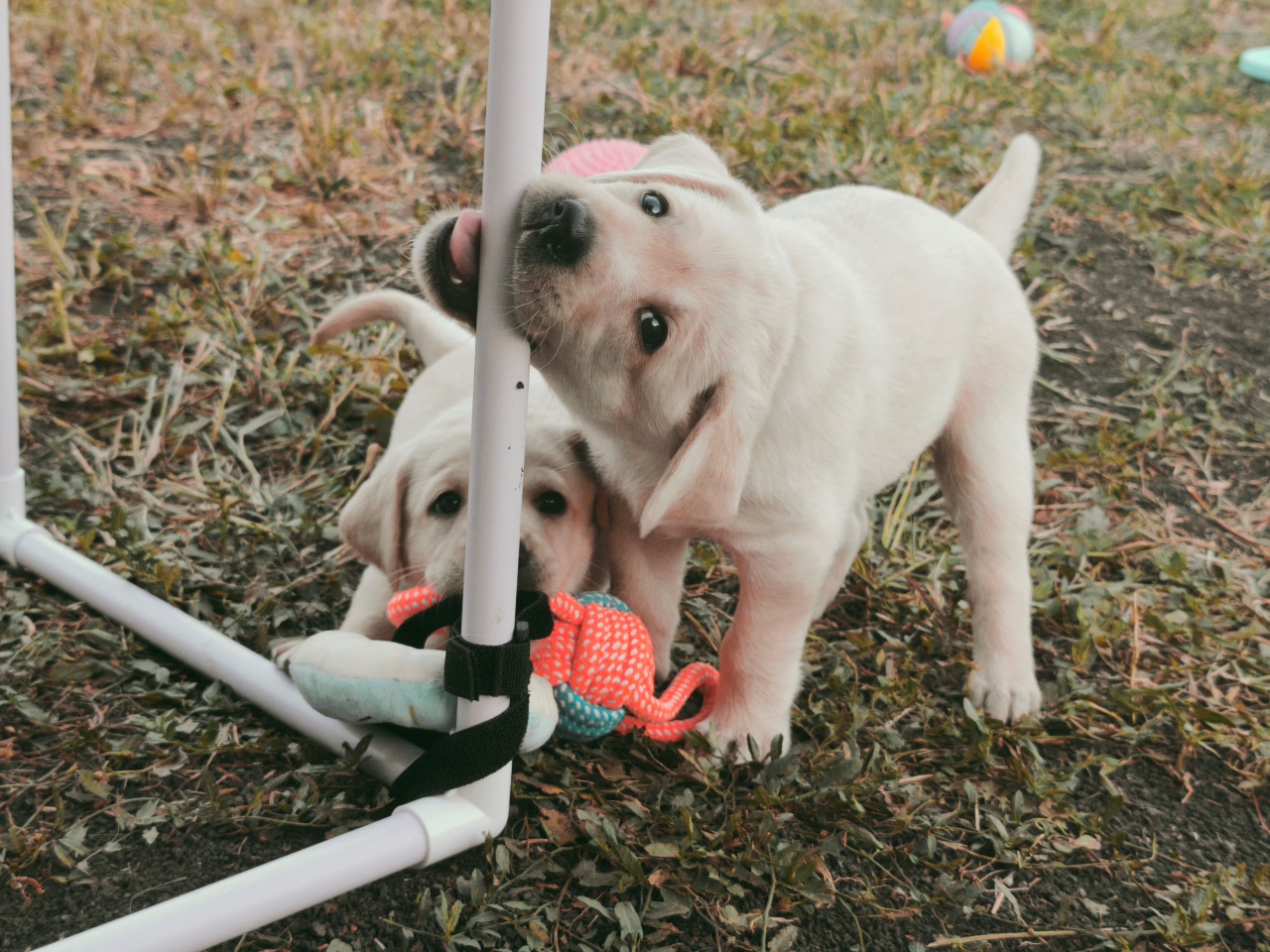
Over the course of just a few weeks, Labrador puppies training to become guide dogs undergo an incredible transformation. Azúr’s eight puppies are now five weeks old. Their tentative first steps are turning into confident little runs, while cautious exploration gives way to playful curiosity.
By the time they were four weeks old, they were already becoming more active, and over the past few days, they have made remarkable progress. They are walking more steadily, confidently wrestling with one another, and eagerly exploring their surroundings, while almost every new object they encounter quickly becomes theirs to investigate. To them, the world is one giant adventure, best discovered with their noses and their tiny, needle-sharp teeth. No wonder everything is fascinating at this age: toys, shoelaces, trouser legs—or even a hair tie.
One experience always leads to another
We are constantly enriching their environment with new stimuli. They climb over balance-training toys, crawl through tunnels, try out toys made from different materials, and spend more time in the garden too. Every new experience helps them to become confident, well-balanced dogs. Although the summer heat means they can only spend shorter periods outdoors now, they still have plenty of opportunities to explore the outside world in the early morning hours and during cooler spells.
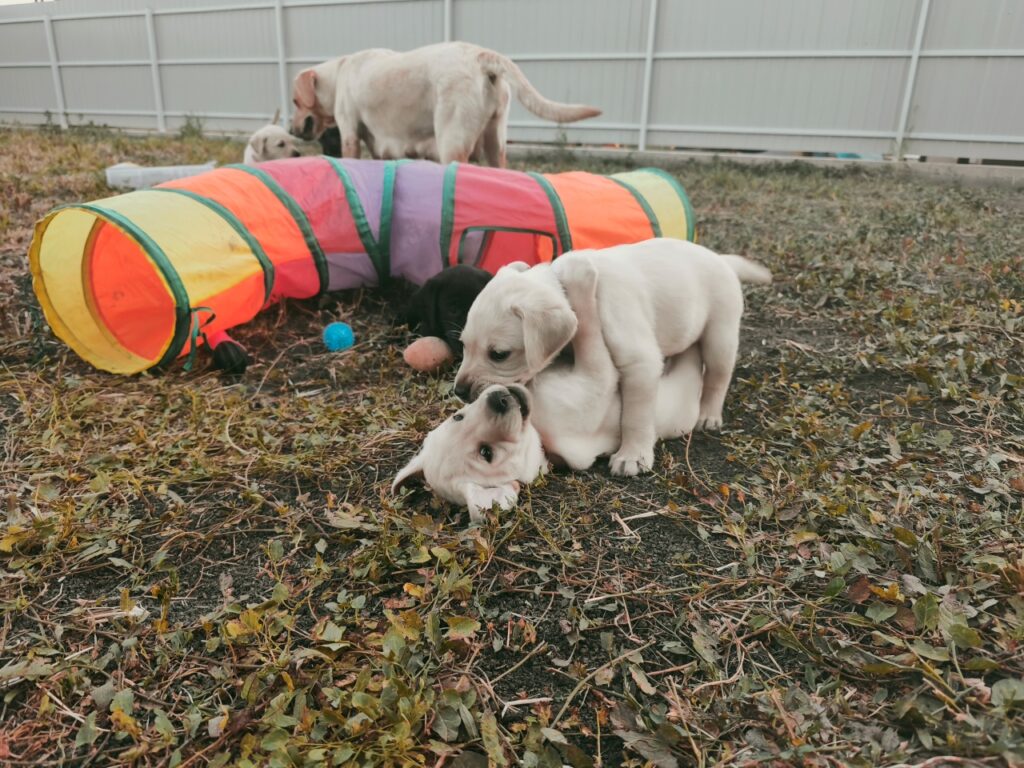
Red, pink and blue collars
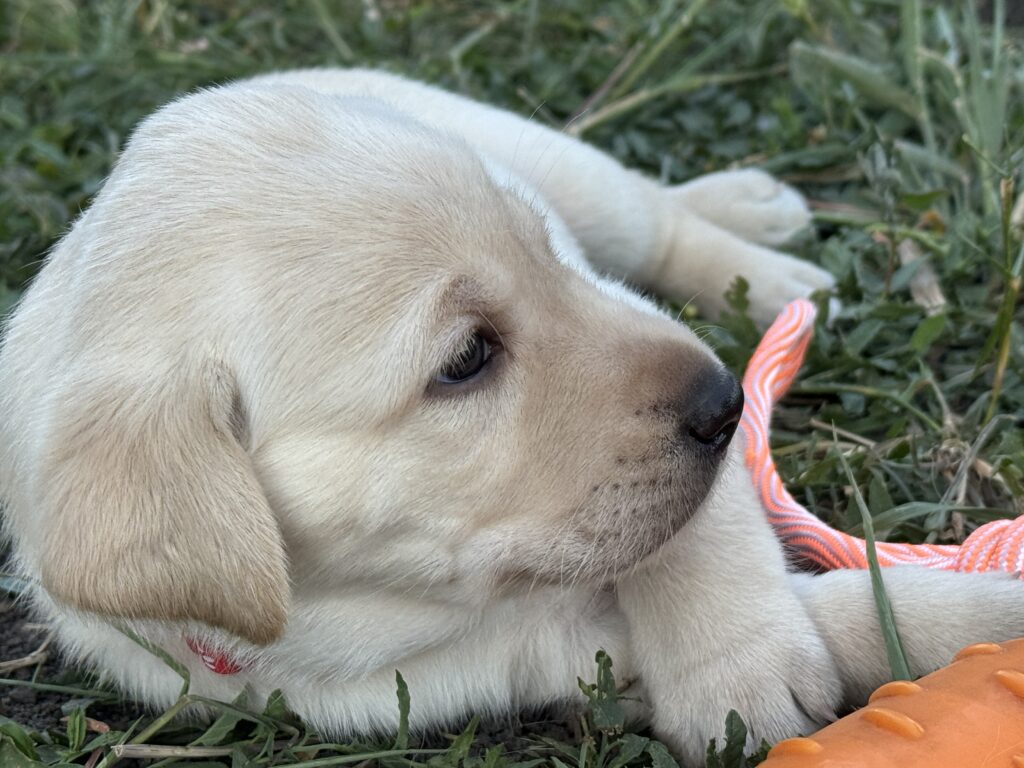
Their development isn’t just evident in their movements. Their little teeth have come through nicely, so chewing is playing an increasingly important role in their lives. The fact that they gnaw on everything at this stage is completely natural behaviour: this is how puppies explore their surroundings. Later on, it will be up to their owners to teach them what they’re allowed to chew on and what they should leave alone and replace with a toy instead.
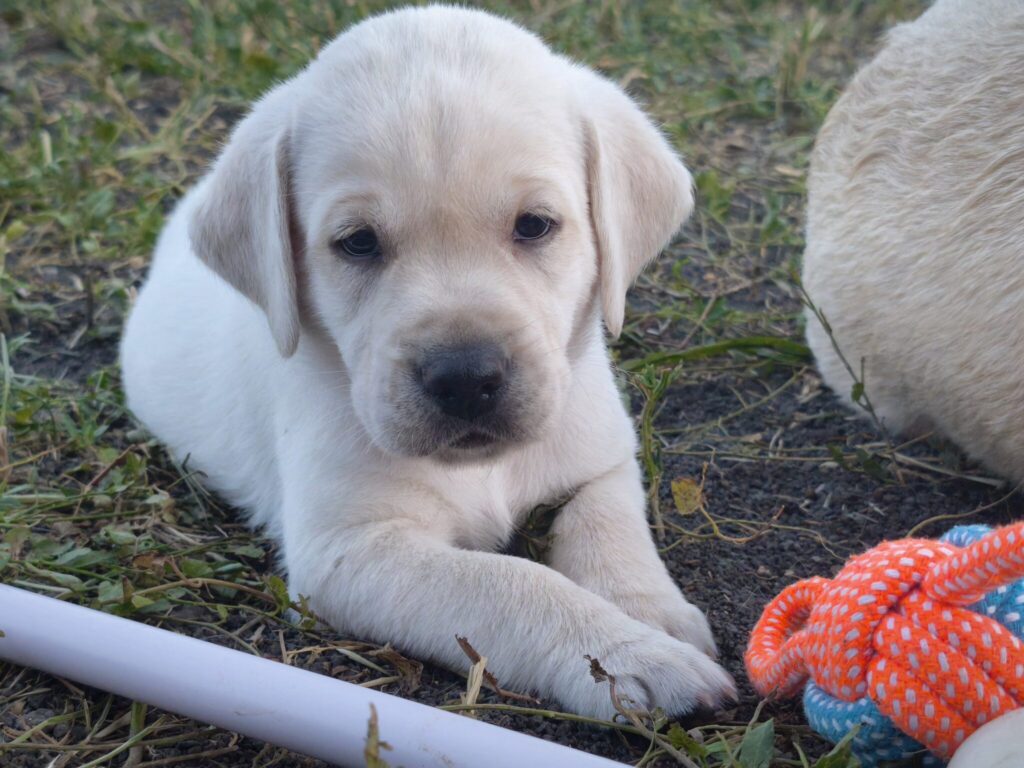
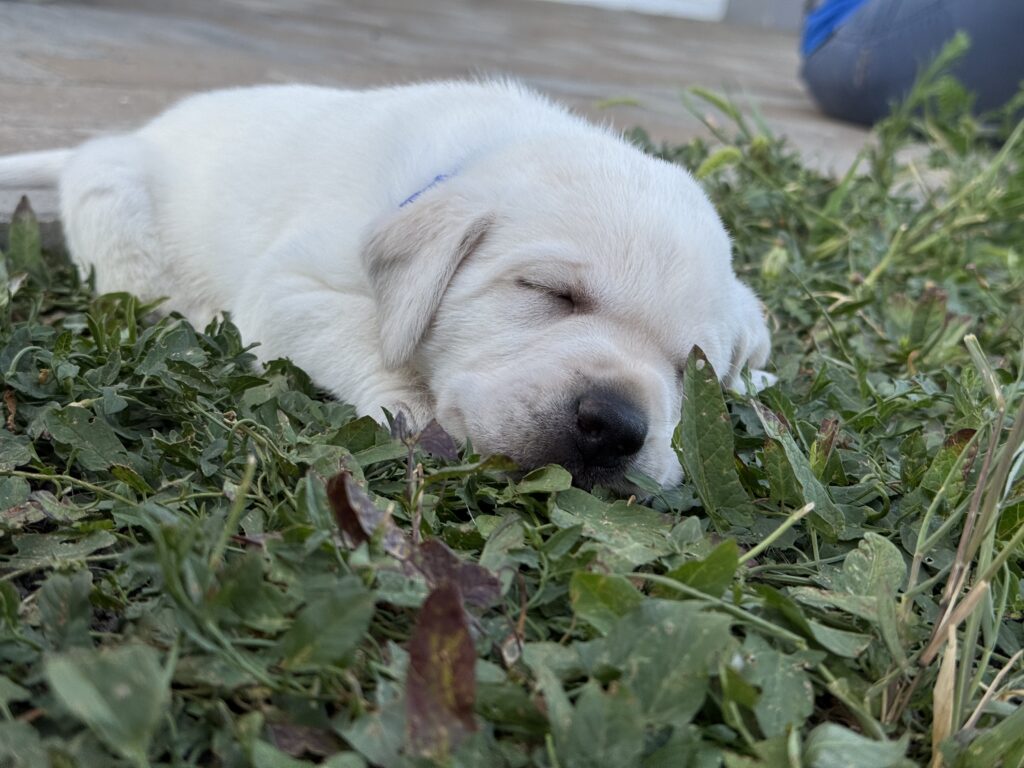
Their personalities are also becoming increasingly distinct. The two most active members of the litter at the moment are the little girls with the red and pink collars, who are always up for a bit of an adventure. The little boys with the blue collars are calmer by nature, but they don’t miss out on the fun either. We can rest assured: all eight are curious, healthy and well-balanced puppies.
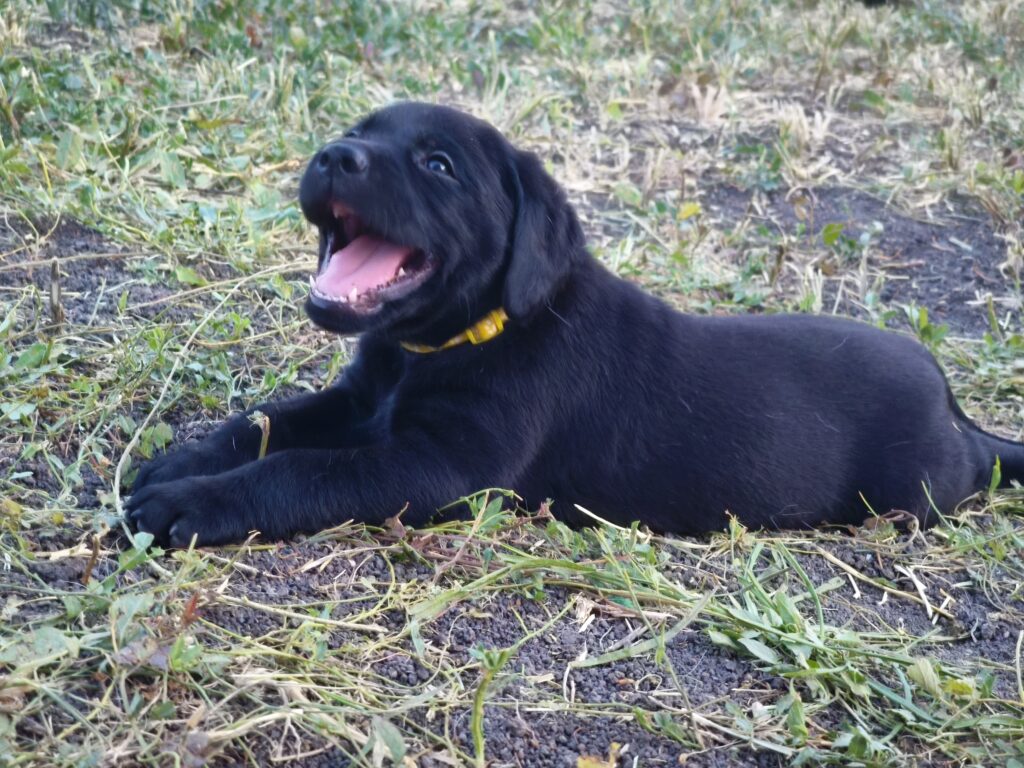
Short, playful sessions
Although no one expects them to perform serious tasks at this age, we’re already laying the foundations for their guide dog training. Through short, playful sessions, we practise the ‘come’ command with them, the “pee and poo” command, and we also practise getting them used to having their paws and ears touched, or having their mouths examined. These little things will become hugely important later on.
Their diet is also changing. Azúr is still nursing them, but they are being offered puppy mush and water more frequently. As their teeth grow stronger, they are gradually transitioning to more solid food, so that by the time they are nine weeks old, they will be fully transitioned to solid puppy food.
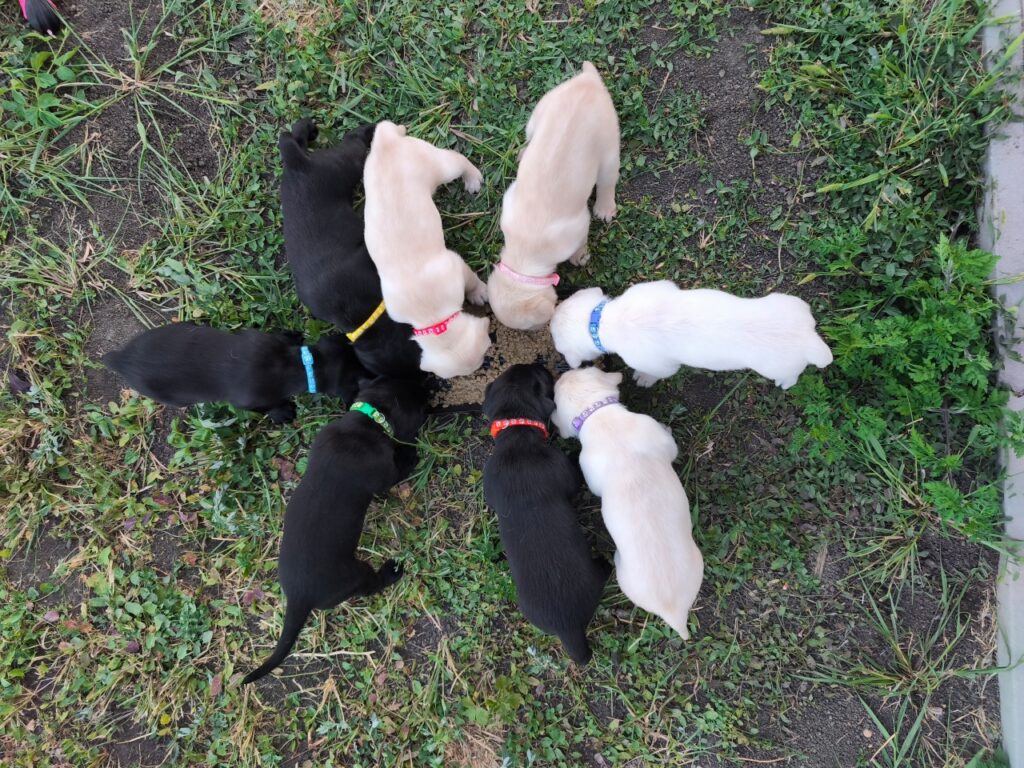
It is good news that their house-training is going well. The puppies are taken out into the garden regularly, and they are already doing more of their business outside. They are also already able to make it through the night without accidents, which is a great result at such a young age.
Next week will mark another important milestone in their lives: they will undergo their first temperament test. This will help the experts ensure that each puppy is later placed with the handler where their abilities can flourish most. After all, every dog is unique, and each has their own path to becoming a loyal companion to a visually impaired person or serving as another type of assistance dog. And we continue to delight in following this special journey – week by week, step by step.
IMPORTANT!!!!
Azúr’s puppies already have their puppy carers; now we’re looking for carers for Malina’s seven puppies!
If you’d like to be part of the journey that transforms a puppy into an assistance dog, apply to become a puppy raiser! With your love, patience and commitment, you can help ensure that one day a visually impaired person will have a loyal four-legged companion.
In early October, you can take home a nine-week-old puppy and form a lifelong friendship with this wonderful dog, who will go on to assist a visually impaired owner. Those interested will take part in a training course where we’ll provide all the essential information. This training course will take place on 13 September in Budapest.
Our foundation welcomes applications from interested people across the whole country, regardless of age. You won’t be separated from the puppy you’ve raised ‘forever’, even after it has been placed with a visually impaired owner. You’ll be able to meet up with it, have it stay with you on holiday, and we’ll keep you updated on how it’s getting on in life.
A guide dog is the eyes of a visually impaired person. Join us in this important mission – become a puppy raiser!
Apply HERE!
Thank you!
The team of Baráthegy Guide Dog and Assistance Dog School Foundation

Leave a Reply