


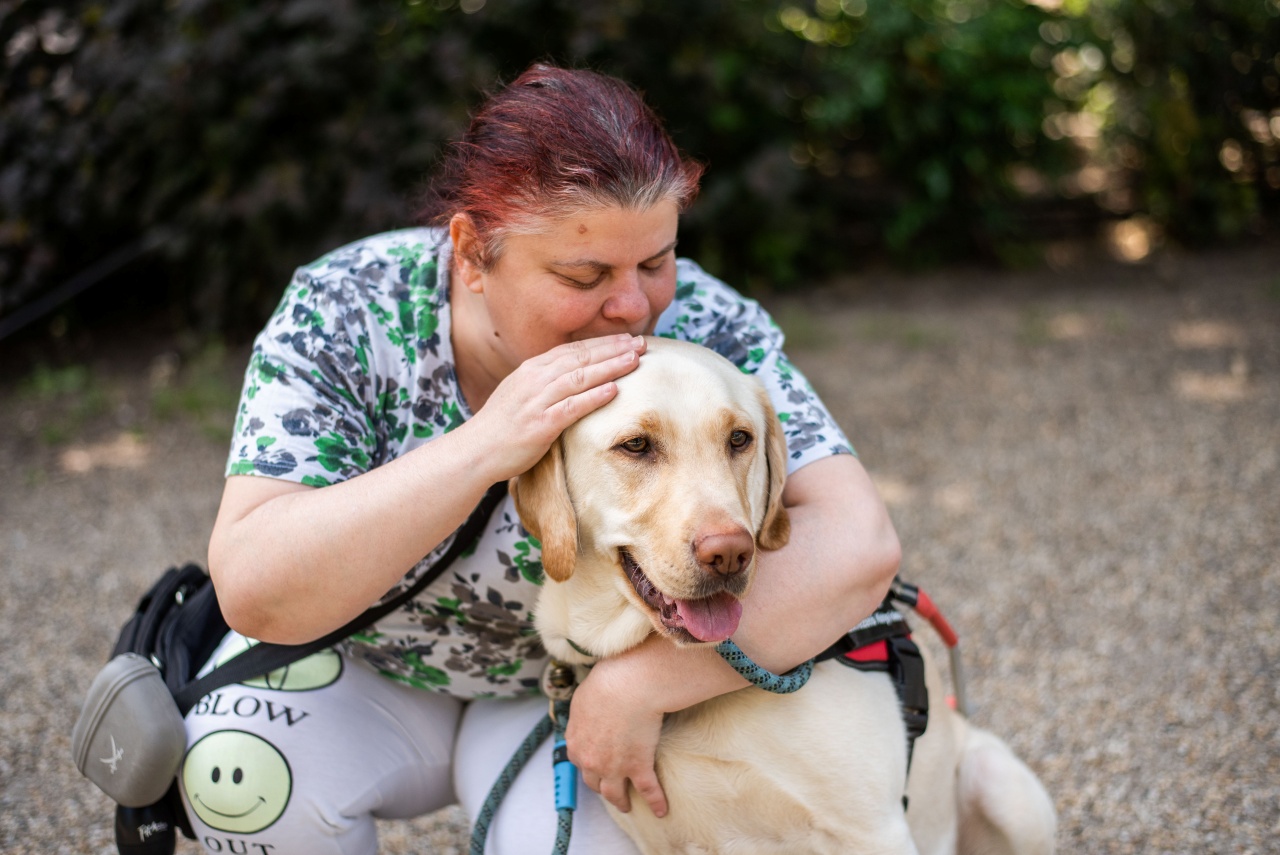
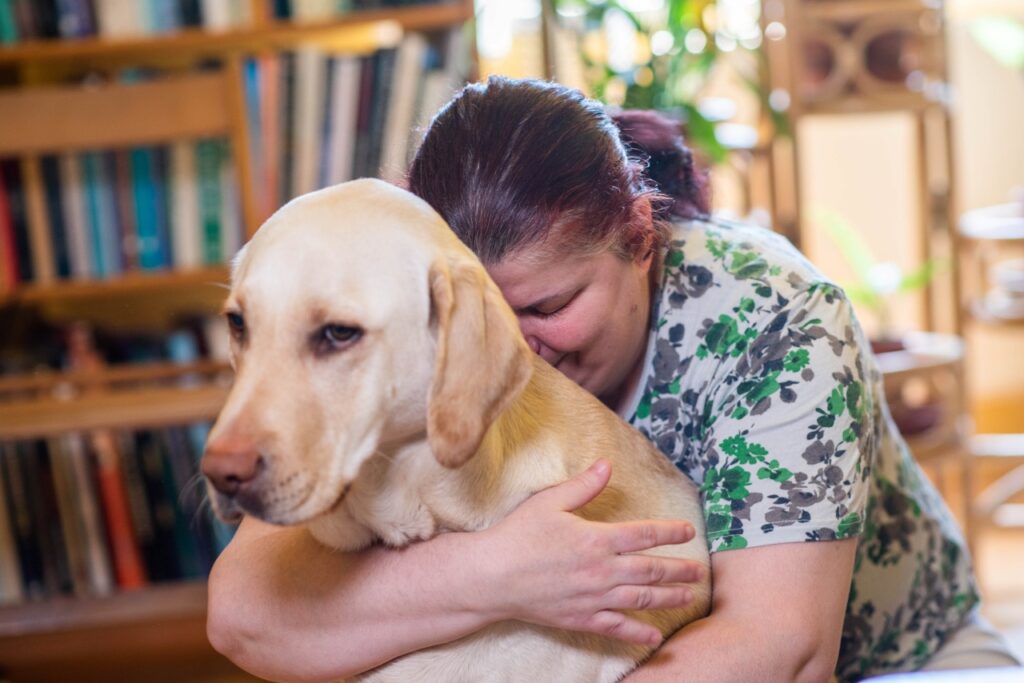
There are people whose lives have been hard from the very beginning. Yet Katalin does not speak most of all about her losses or her trials — she speaks about the dog who is always by her side. About Dióda.
Katalin was born at seven and a half months from a twin pregnancy. Her sibling did not survive, and she herself, weighing barely over one kilogram, was placed in an incubator — where her optic nerve sustained damage so severe that she would never be able to see the world.
The diagnosis did not only change her life. Her mother was unable to come to terms with the situation and left the family. Katalin was ultimately raised by her father and grandparents.
“I owe them my survival,” she says to this day.
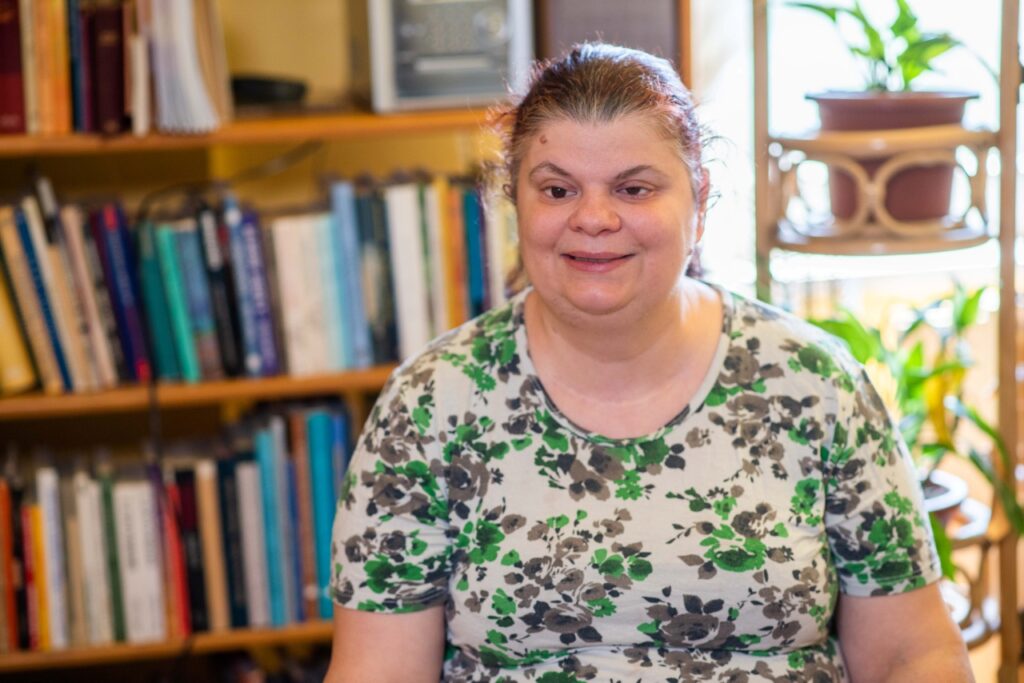
Difficult Years on Her Own
A defining part of her childhood was spent at a residential school in Budapest, where she arrived at the age of eight. She was permitted to go home only once a fortnight, which was particularly hard to bear. Beyond missing her family, she longed most of all for animals. The closeness of the dogs and cats at home gave her a sense of security, and every parting after a home visit was painful:
“We always had dogs and cats at home. I loved them so much. I often cried when I had to go back to school.”
It was during this period that she first encountered a guide dog. A fellow student had a four-legged companion, and it was then that the thought first took root in her mind: one day, she too would like a partner like that by her side. She did eventually receive a guide dog, but difficult living circumstances meant she was soon forced to part with the animal.
As an adult, she faced a great many challenges. Her father’s struggle with alcohol dependency meant she spent a long period caring for him, all while trying to build a life of her own. She travelled to him regularly, doing her best to support and help him for as long as she could. That period consumed enormous amounts of her energy and repeatedly pushed her own needs to the background.
“I had very little time for myself. What was hard was not having to help him — it was having to manage the problems that alcoholism brings, alone, and without sight.”
Later, her personal life brought further hardship. Her marriage ended, she faced housing difficulties, and for a time she experienced homelessness. But life then offered her a new beginning.
Steps Towards Fulfilment
In 2022, she met her current partner, Zoli. Their relationship began through a programme supporting people experiencing homelessness, and together, step by step, they began rebuilding their lives. They first lived in a homeless shelter, then found work, moved into rented accommodation, and gradually established the stability they had previously only been able to dream of.
Once their lives had grown more settled, Katalin felt the time had come to fulfil a long-held wish. She contacted the Baráthegyi Guide Dog School and submitted her application.
Throughout the process, she received not only professional assistance, but also the attentiveness and human warmth that she says characterises the work at Baráthegyi. The goal was to find the dog who would be the best match for her in both temperament and working style.
“What I received there is difficult to put into words. Professionalism, attentiveness, support, and genuine humanity. I felt that everyone was working to help me and my dog find each other.”
And So Dióda Came Into Her Life
The calm, attentive, and sensitive dog was a perfect companion from the very first moment, and quickly became part of the family. Within a short time, she had become an indispensable presence in their lives.
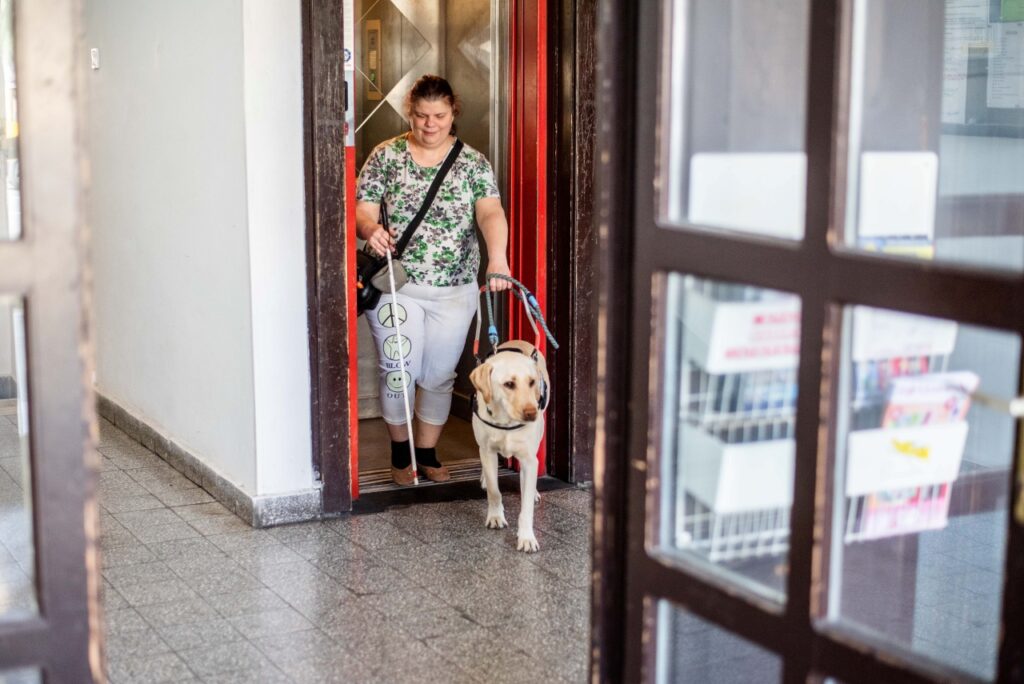
After a recent move, the two of them had to learn new routes and navigate an unfamiliar environment. Dióda guided Katalin with quiet confidence throughout. She works attentively, adapts to changing situations, and maintains a constant connection with her handler. Their bond extends far beyond their working relationship. The trust, harmony, and affection between them are present in every step they take together.
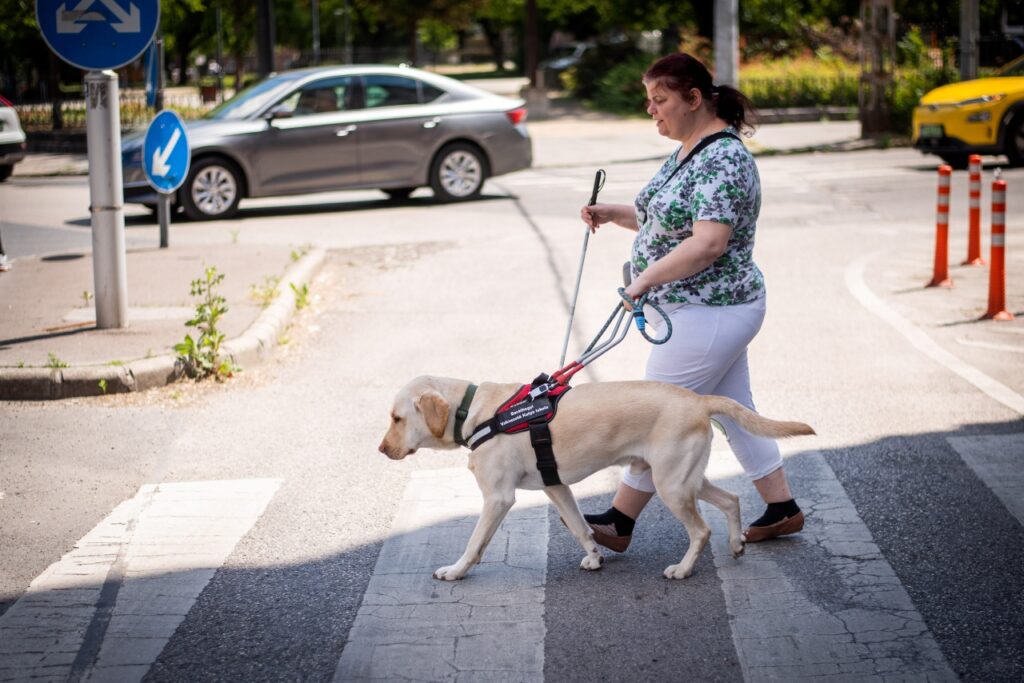
“She pays very close attention to me. I always feel that she wants to help me with everything she has.”
Travelling with a guide dog is, of course, safer — but it means so much more than that. It means independence, freedom, and confidence, and the extraordinary feeling that someone is there beside the visually impaired handler in every situation.
For Katalin, Dióda means all of this at once.
We will soon continue Katalin’s story, in which her husband Zoltán will also introduce himself.

Leave a Reply