



The HUN-REN SZTAKI conference in Debrecen offered a scientifically grounded journey into the world of digital development. One of its programme events was “Without Barriers,” in which the team of the Baráthegyi Guide Dog and Service Dog School Foundation delivered a disability awareness session. Our foundation’s aim was to foster understanding and empathy towards people living with disabilities.
On 31 March, the team of the Baráthegyi Guide Dog and Service Dog School Foundation held a disability awareness programme at the University of Debrecen. Participants had the opportunity to experience what it is like to trust a guide dog with a blindfold over their eyes. They spoke with visually impaired handlers about the ways in which their guide dogs assist them in getting to work and serve as devoted companions.
Zoltán Vida, an IT specialist and foundation staff member, demonstrated alongside his guide dog Rizling how he communicates and works accessibly using his mobile phone with specially installed assistive software. He also introduced attendees to the Braille writing system.
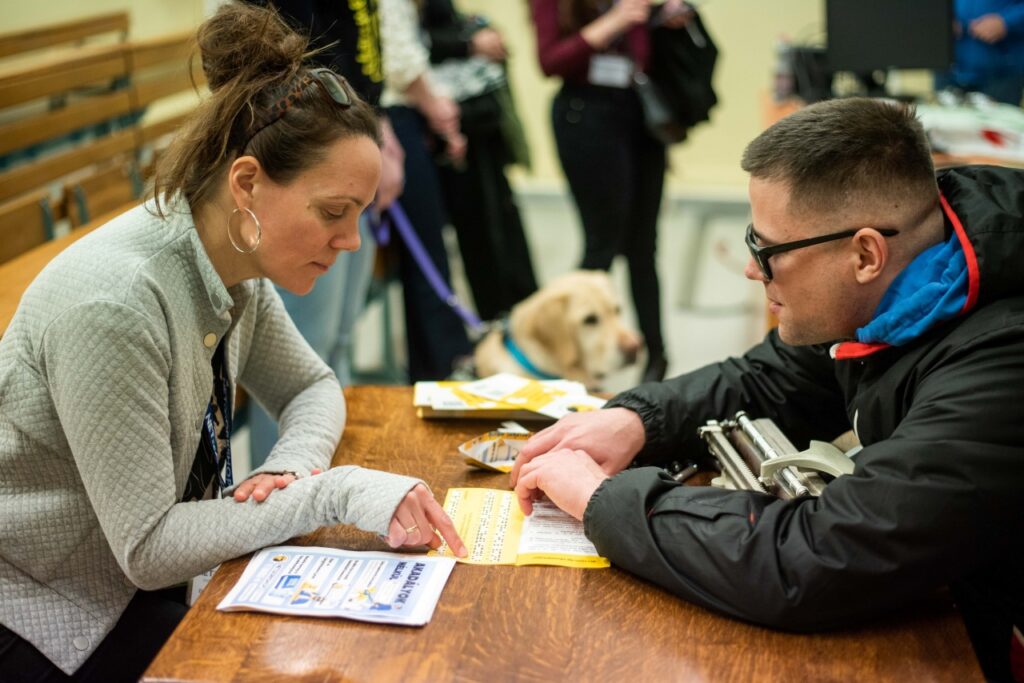
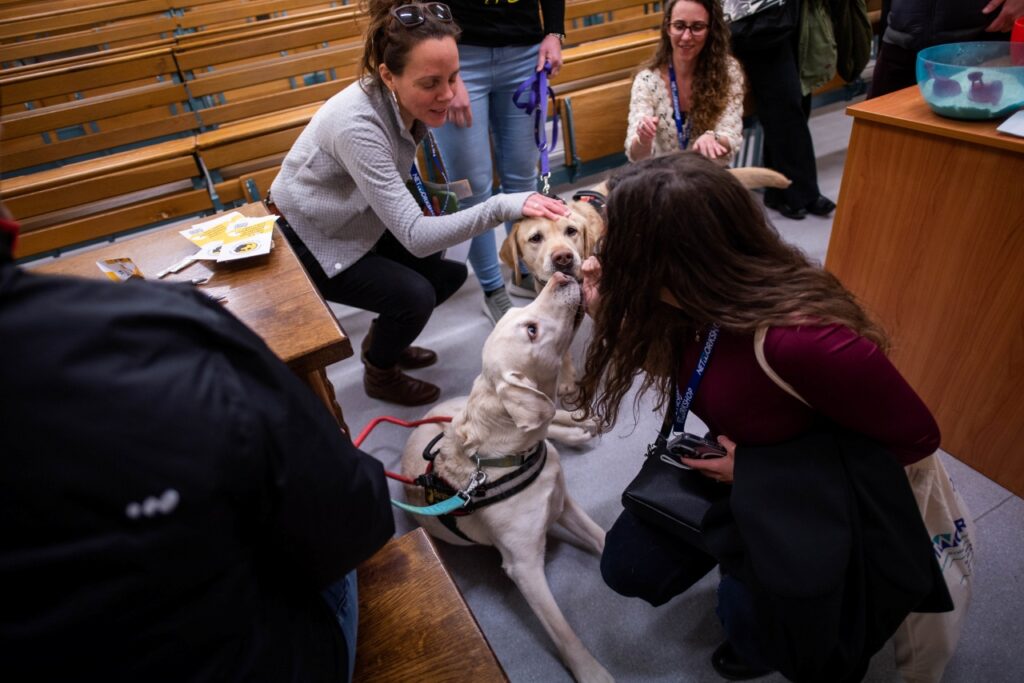
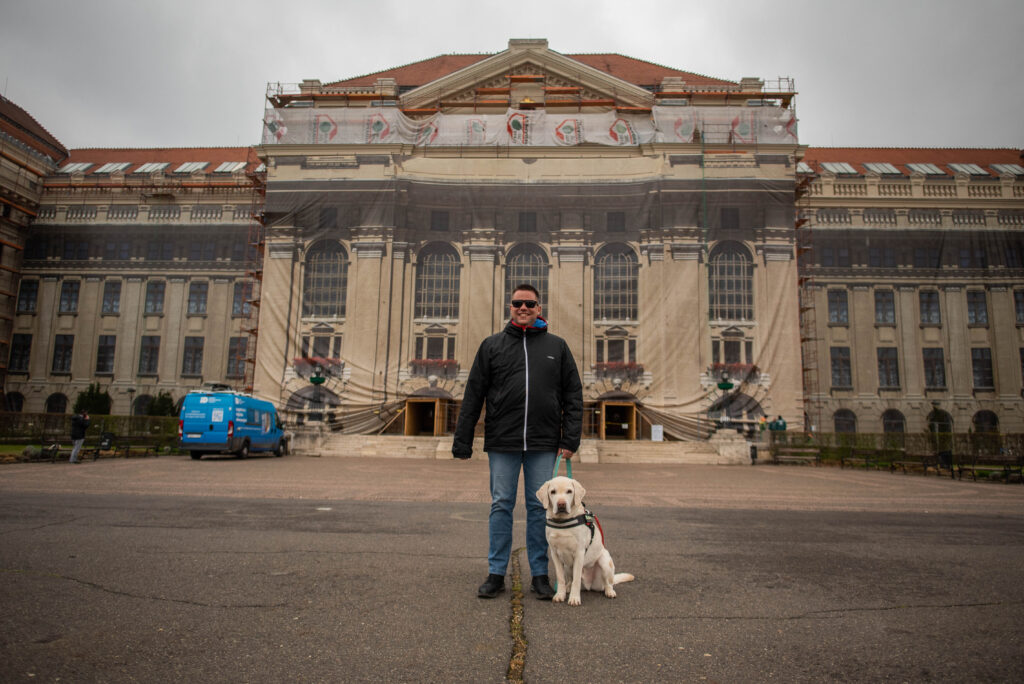
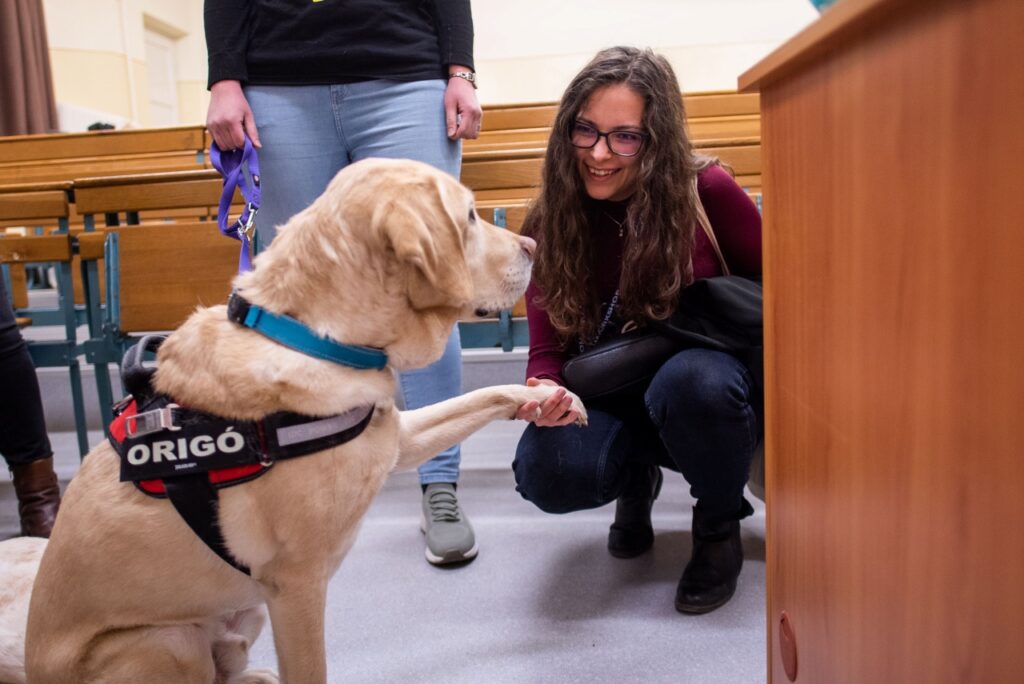
Barna Kiss, the handler of Tangó, shares his home with two guide dogs: Tangó is his current working dog, while his previous partner, Gyömbér, is spending his retirement years with the family as well. Barna works at a soft drink manufacturing plant, where Tangó rests by his side during working hours — though he has also helped Barna on more than one occasion by retrieving objects that have fallen during the workday.
Foundation staff provided information on guide dog training and demonstrated the operation of assistive devices that help visually impaired people lead independent lives — such as talking scales and liquid level indicators. Through playful hands-on activities involving scent and object recognition, attendees were also able to test their own senses.
Dogs with a Mission
Our foundation began its work twenty years ago. Over two decades, we have provided more than two hundred guide dogs to visually impaired applicants. Additionally, in recent years, we have also been involved in training service dogs, mobility assistance dogs, and therapy dogs.
The most important achievement of these two decades is that guide dogs are always provided to visually impaired applicants at no cost. We accompany each handler–dog partnership throughout their life together, supporting their safe and independent mobility, covering significant veterinary expenses, and ensuring a dignified retirement for the dogs when their working life comes to an end.
The resources required to train guide dogs are provided by donations from private individuals and companies, as well as by supporters who designate 1% of their personal income tax to the foundation.
How Many Guide Dogs Are Needed?
Hungary needs more guide dogs. Many visually impaired people are currently waiting for a faithful companion at the foundation. There are presently 47 people on the waiting list. According to the foundation’s plans, around 30 puppies are born each year through our breeding programme, each of whom may go on to become a guide dog the following year.
How Much Does a Guide Dog Cost?
The total lifetime cost of a guide dog exceeds 6,000,000 Hungarian forints (approx. €15,000).
A guide dog’s working life spans approximately ten years. The total costs over that period include: breeding dogs, breeding and whelping, puppy raising, health screenings, veterinary costs, daily care, equipment, training (with a professional training fee of 2,000,000 HUF), handler training, placement, assessment, follow-up support and aftercare over ten years, equipment replacement, additional veterinary costs for the ageing dog, retirement-related costs, and ongoing overheads such as utilities and vehicle use.
This is how the total cost over ten years exceeds 6,000,000 Hungarian forints.
Our cover photo features Barnabás Kiss and his guide dog, Tangó

Leave a Reply